
Proactive Tax Planning . Smarter Financial Decisions.
Let’s plan before you file, so yo can make confident decisions today that create flexibility tomorrow.
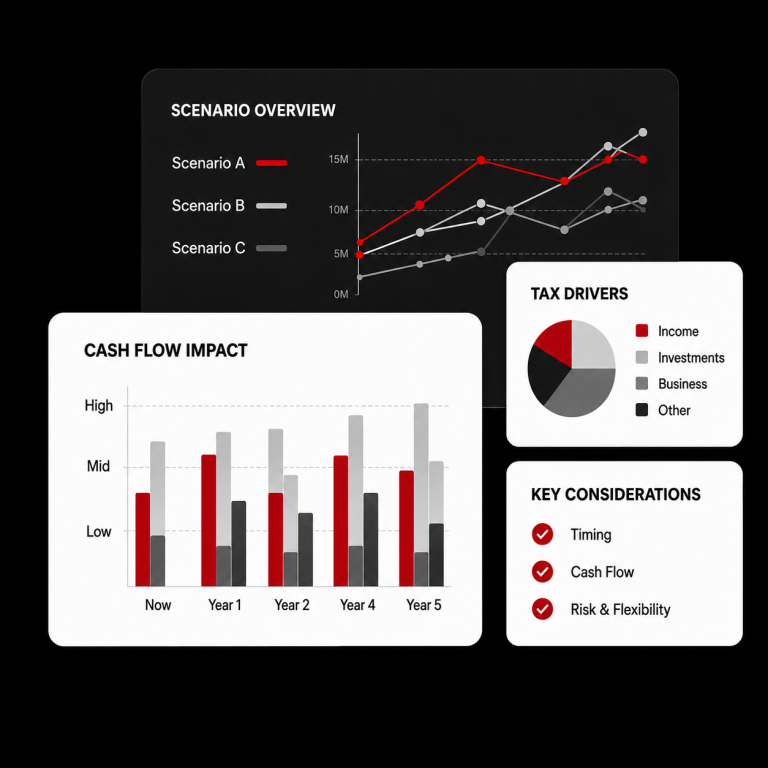
Tax Season Shouldn’t Be the First Time You Think About Taxes.
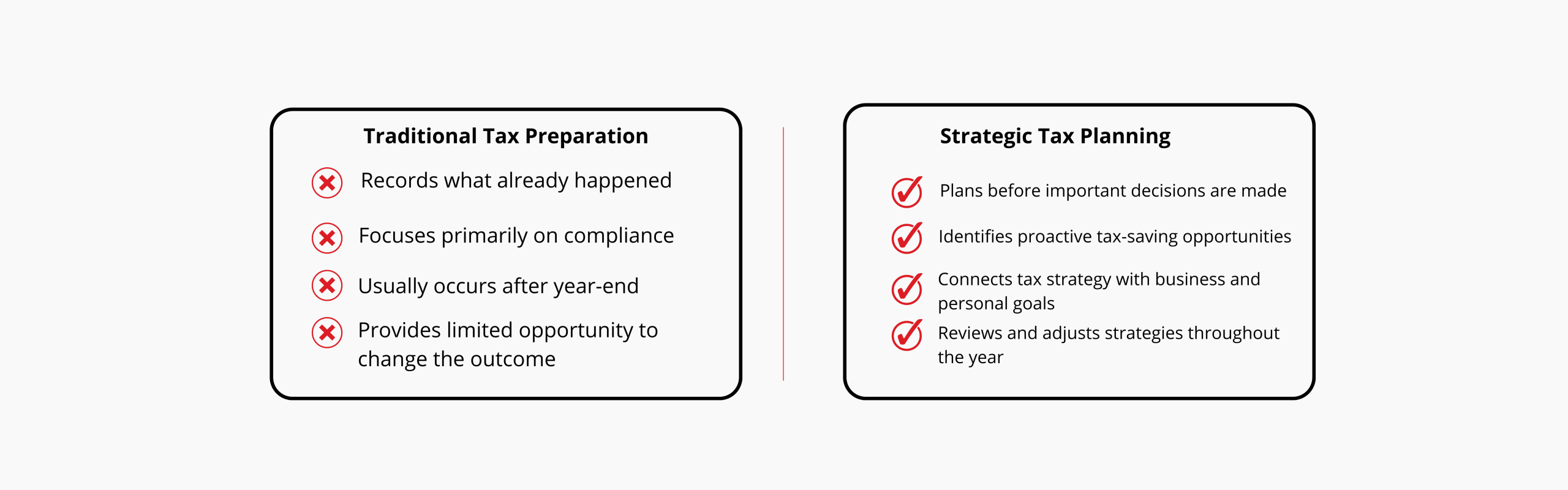
Traditional tax preparation looks backward. By the time your return is filed, many valuable planning opportunities may have already passed.
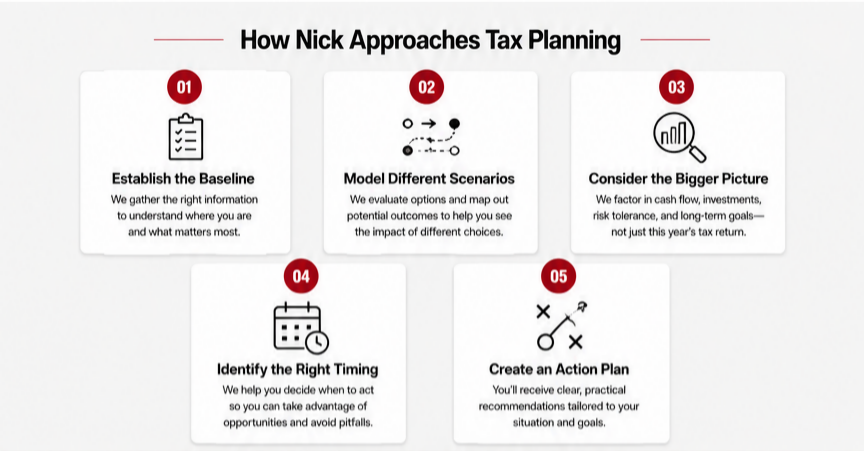
Strategic tax planning looks forward. We analyze your income, business structure, investments, and long-term goals to identify opportunities before key decisions are made and deadlines arrive.
Designed for Clients With More Complexity—and More at Stake.
Strategic Tax Planning may be right for you if:
You own a profitable business
Your income has increased significantly
You regularly owe more taxes than expected
You have multiple entities or income sources
You are considering a major investment or transaction
You want proactive guidance instead of once-a-year tax preparation
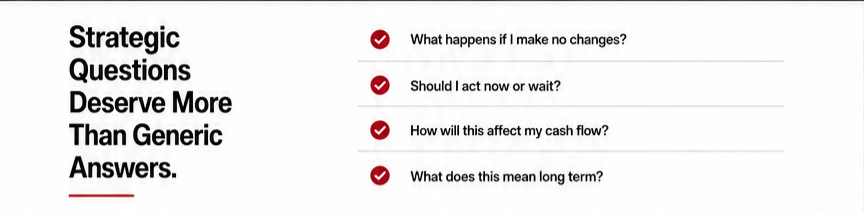
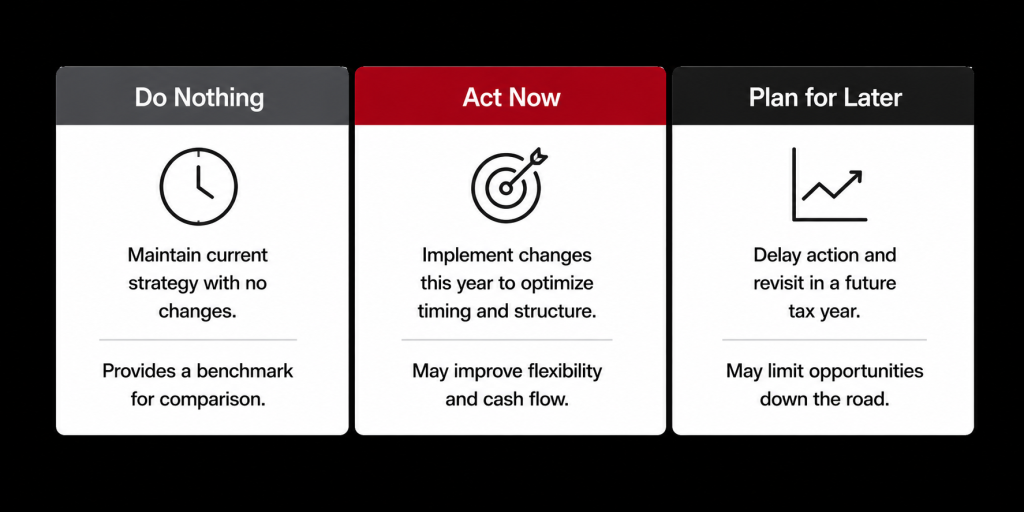
An Anonymous Case Study Hight-Income Professional.
A successful professional with a growing business and invesment portafolio wated to understand how different timing and income strategies could impact their overall financial picture.
I modeled three potential approaches to help evaluate trade off and long term outcomes
FAQ
What is strategic tax planning?
Strategic tax planning is a proactive process of reviewing your income, business structure, investments, and financial goals to identify legitimate opportunities to reduce taxes before important deadlines and decisions occur.
Is tax planning the same as tax preparation?
No. Tax preparation reports what already happened. Tax planning focuses on what may still be done before transactions, deadlines, and year-end.
How much can tax planning save me?
How much can tax planning save me?
Every situation is different. Potential savings depend on your income, business structure, investments, activities, and which strategies are appropriate for your circumstances.
When should tax planning begin?
Ideally, tax planning should happen throughout the last quater of the year. The earlier opportunities are evaluated, the more options are generally available.
Will you also prepare my tax return?
Tax planning and tax compliance can work together, but the exact scope of services will depend on your engagement.
Can tax planning help if I already work with a CPA?
Yes. Strategic tax planning can complement your existing tax preparation relationship by focusing specifically on proactive opportunities, future decisions, and long-term strategy. The exact coordination will depend on your engagement and the professionals already involved.
Do I need to own a business to benefit from tax planning?
Not necessarily. While business owners often have more planning opportunities, high-income individuals and families with investments, real estate, multiple income sources, or complex financial situations may also benefit from proactive tax planning.
What information will you need to build my tax strategy?
The process typically includes reviewing relevant tax returns, business and financial information, entity structure, income sources, investments, compensation, and your short- and long-term goals so recommendations can be evaluated in the context of your full financial picture.
Your Tax Strategy Should Be Built Before the Deadline
Let’s identify opportunities, build a proactive plan, and help you keep more of what you earn.